Inside the viaNexus platform, and how we turn a firehose of wild quotes into the VNX Implied Price.
What is the VNX Price?
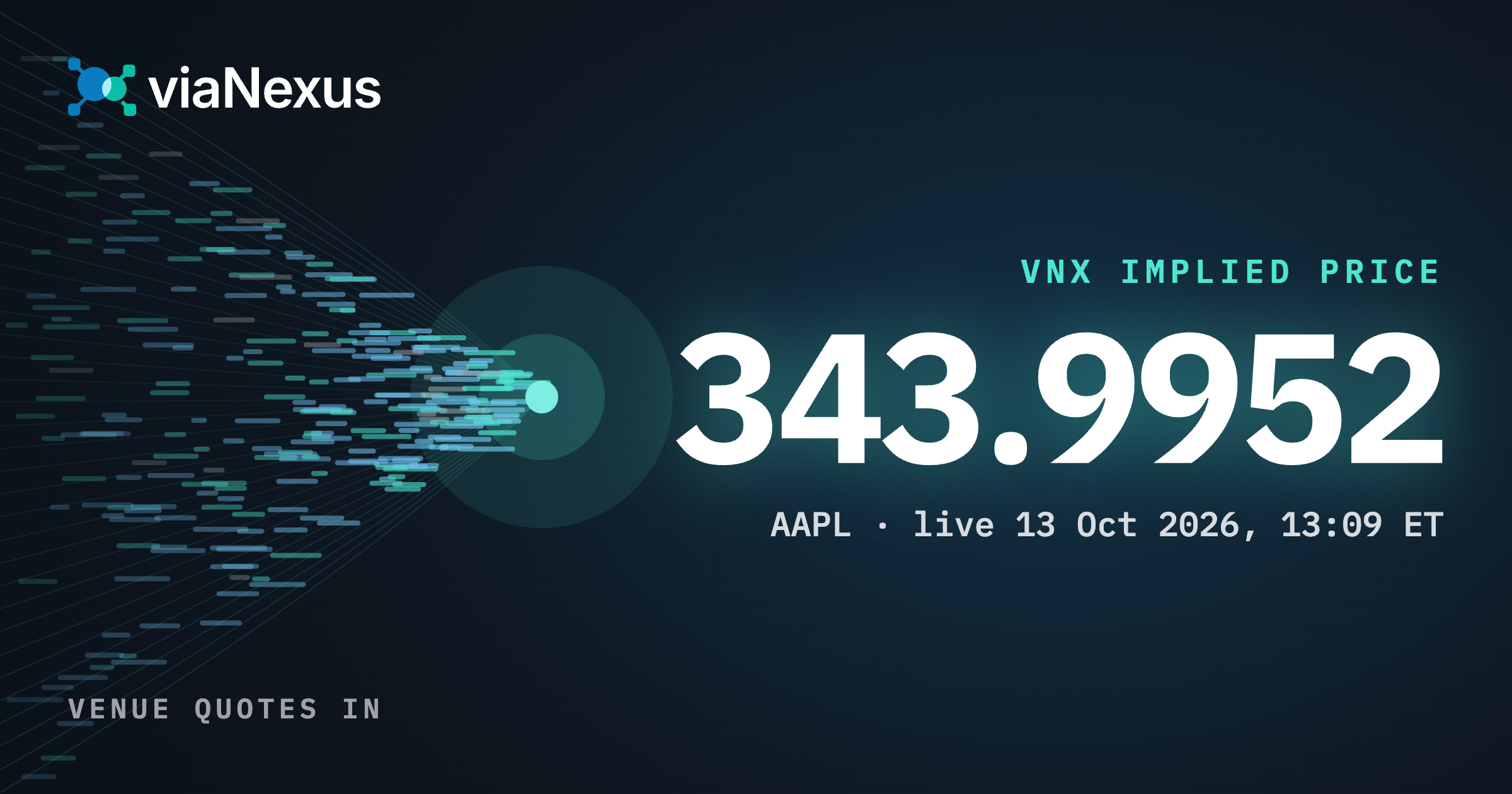
VNX Implied Price updating in real time. Each tick is a new estimate, published only when the quotes behind it agree.
VNX Price is viaNexus's near real time predicted price for U.S. equities. It uses bid and ask observations across multiple venues to generate an implied market price, and gives you a cost effective input for portfolio views, dashboards, alerts, analytics and AI workflows that do not need every exchange tick, or exchange level licensing.
But what's going on behind the scenes and how good is it?
Why a screen full of quotes is NOT a price
If you’ve ever looked at raw market data, you know the struggle. A single stock trades across dozens of places at once, each screaming its own bid and ask. When markets are quiet, they mostly agree. But when things get spicy, those numbers pull apart fast. Somewhere in that mess is the actual price your product needs to display, but raw feeds leave you hanging.
Here are the three big culprits ruining your market view:
- Venues conflict: Pick one venue and you’re gambling; average them all and bad quotes pull your price off course.
- Delays creep in: Consolidated feeds can lag by 15 minutes. Great for a basic website, useless if you need live pricing.
- Feeds are full of noise: Tight trades mix with wild placeholder quotes, meaning a single stub quote can jerk your price around by dollars.
Most teams who reach out for the VNX Implied Price do not need more raw data. They already have feeds coming out of their ears. What they actually need is one trustworthy number they can confidently put in big bold font on screen.
It’s a semantics problem, not just quick math
Fusing quote streams sounds like basic averaging, right? Wrong. Before combining quotes, you must prove they refer to the exact same instrument right now. A simple ticker string is not enough. Symbols change across countries, securities cross-list on multiple venues, and corporate mergers constantly shift the landscape.
That’s why viaNexus treats securities as rich nodes in a real-time knowledge graph rather than flat strings. We map ISINs, CUSIPs, FIGIs, and exchange codes using explicit relationships like LISTED_ON and ISSUED_BY, tracking exact start and end timestamps for every link.
When a company delists or restructures, corporate action feeds update the graph automatically. No manual mapping tables, no outdated hacks, just clean traversal based lookup that always reflects reality today.
How the engine works: Three simple layers
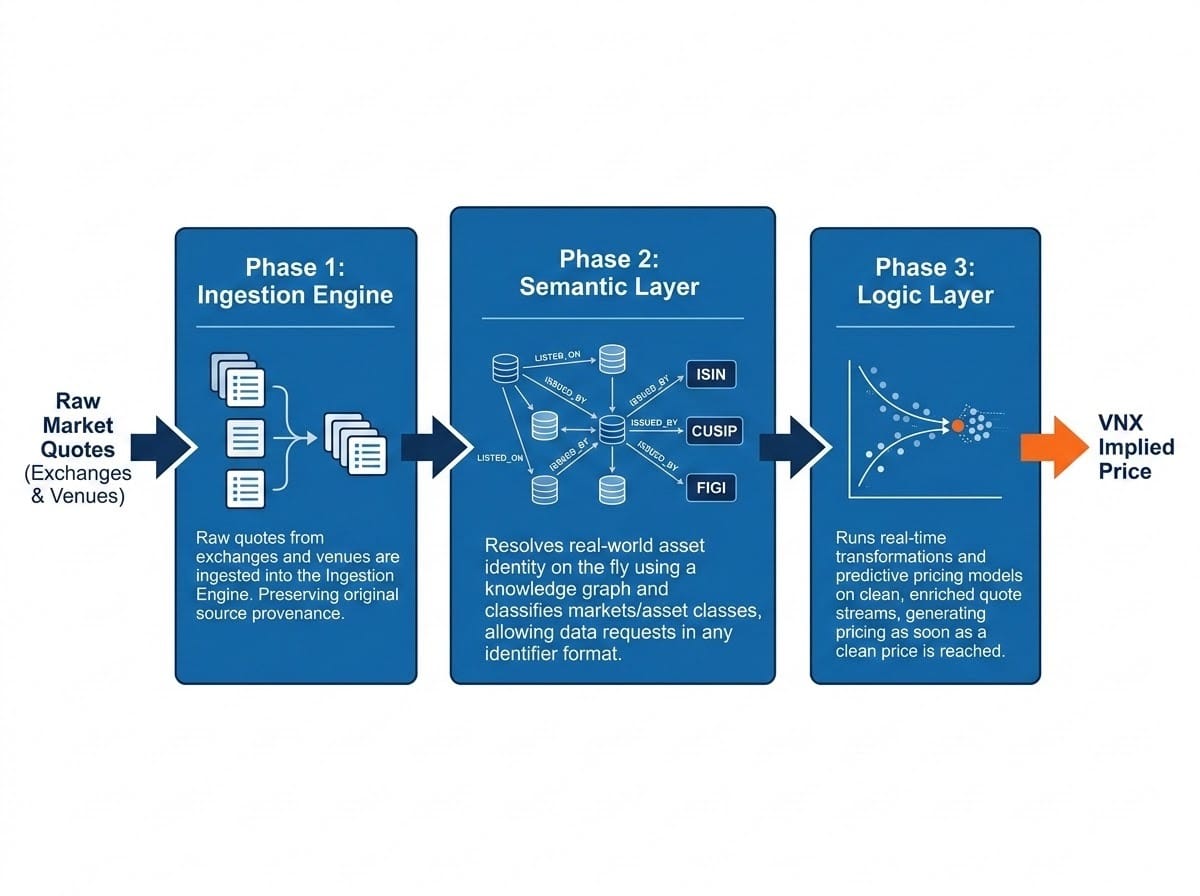
- Ingestion Engine: Normalizes raw vendor feeds into a single contract-governed envelope while carefully preserving original source provenance.
- Semantic Layer: Resolves real-world asset identity on the fly using our graph so callers can request data using any identifier format.
- Logic Layer: Runs real-time transformations and predictive pricing models on clean, enriched quote streams without waiting for overnight batch jobs.
The secret sauce: Accumulate, Predict, Adapt
Accumulate: We build a running picture of active quotes per symbol, throwing away stale or unusable placeholders.
Predict: We isolate genuine clusters of agreeing top-of-book quotes. Order book size acts as an anchor to anticipate where the next trade will land.
Adapt: Fast-moving stocks and quiet names need different rules. The system continuously measures quoting velocity to tune its publication thresholds per symbol.
Why silence is actually a feature
VNX Implied Price doesn't spout numbers just because a message came across the wire. It only publishes when there is solid, credible evidence. If a stock’s liquidity looks messy, the feed stays quiet. While a pause in updates might look like an outage at first glance, it’s intentionally designed that way: we’d much rather stay silent than hand you a bad price.
The Result
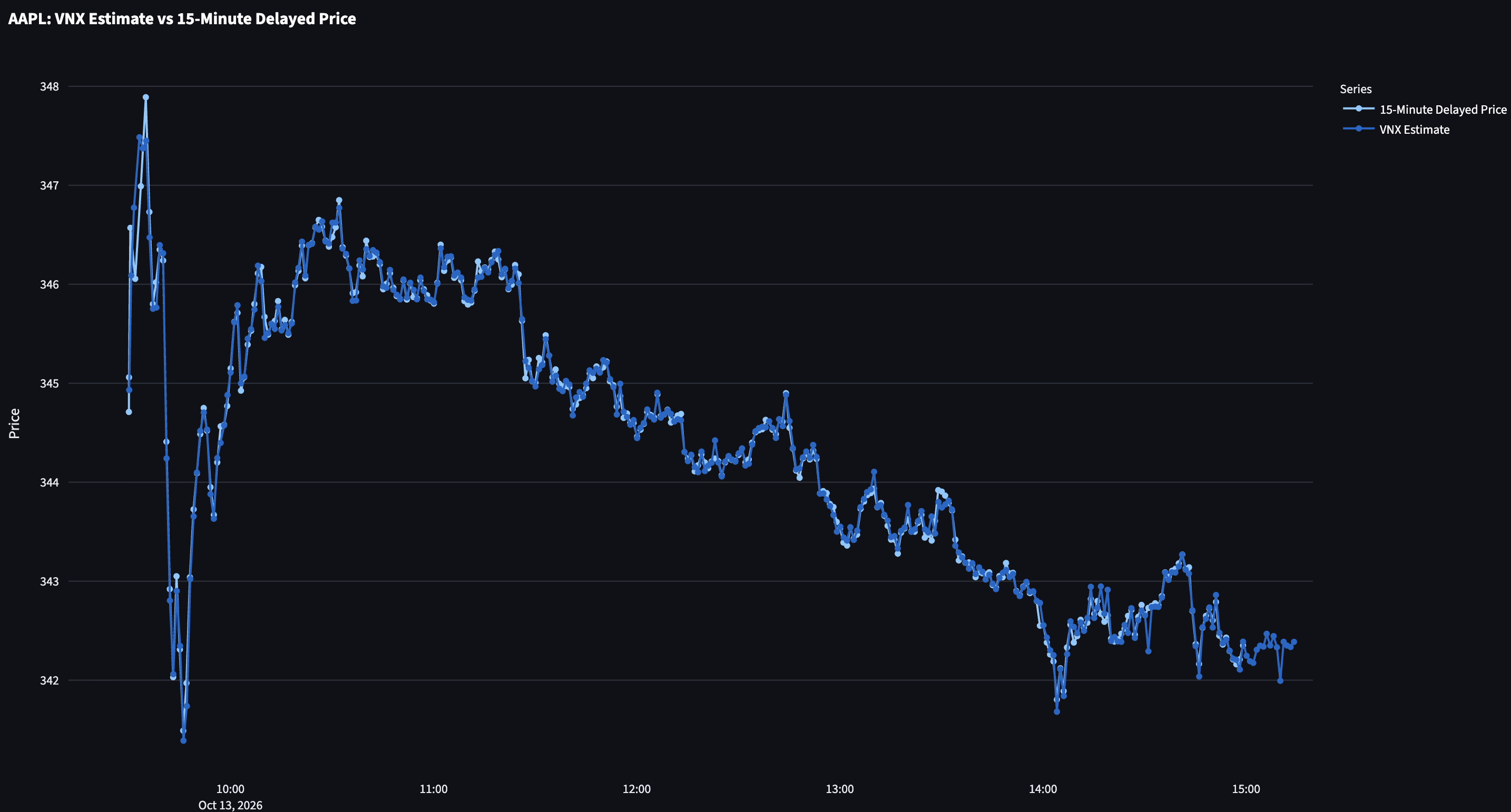
Through continuous refinement and adaptation of our predictive models, we achieve clear, measurable results. Our model delivers real-time price forecasts based on asset liquidity, producing updates in under two minutes even for less active equities.
For high-liquidity assets like S&P 500 constituents, our model outputs updated price estimates every few seconds.
The chart below illustrates AAPL price predictions compared against the 15-minute delayed SIP feed:
Not just an indicated price
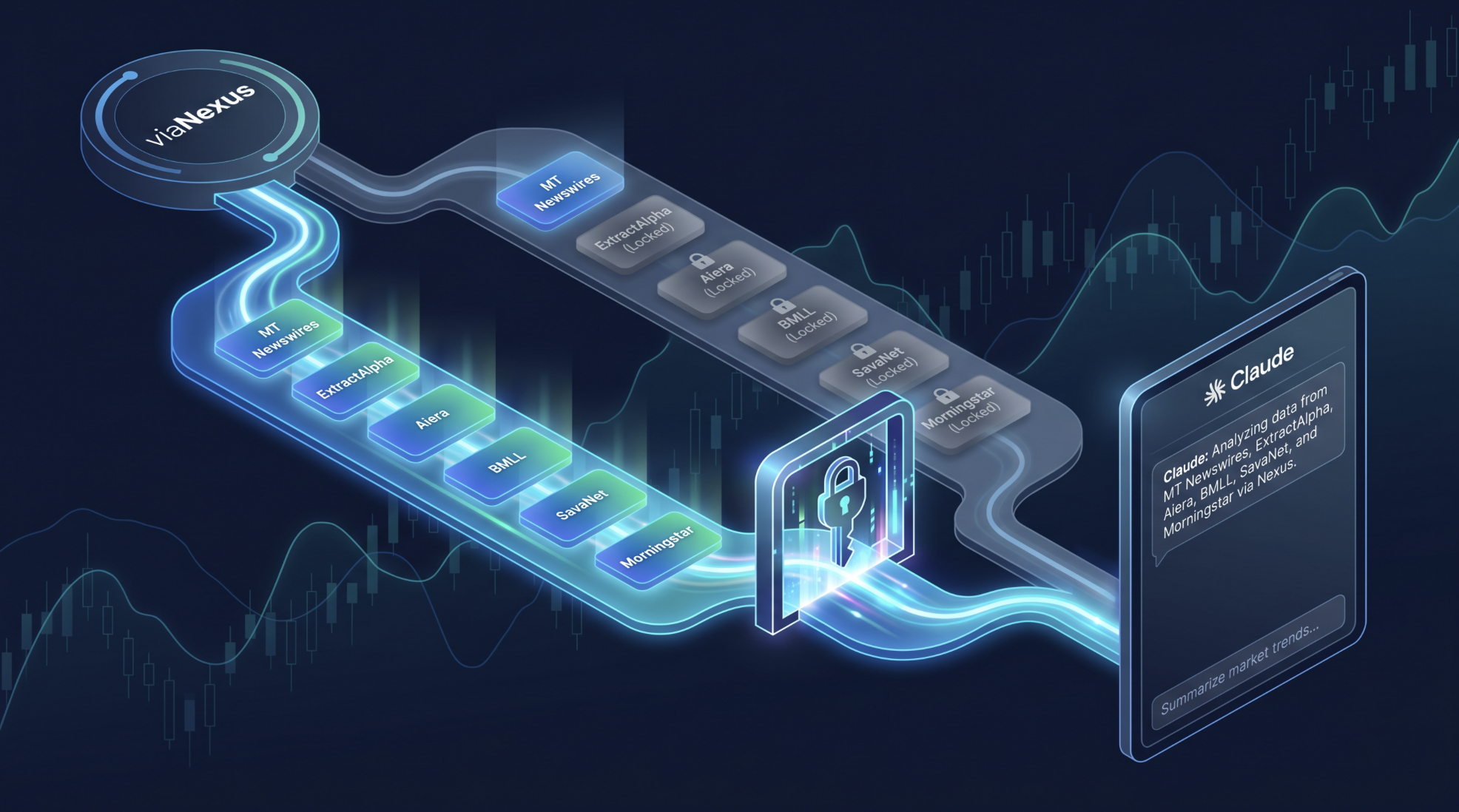
viaNexus is not just a marketplace for a wide range of market and financial data. The platform also integrates with your favorite agent platform or LLM. That is not just for pulling the latest prices on demand, or for buildingyour own live market dashboard. Once you have access to the VNX Price feed you can ask the viaNexus platform, through that LLM, to monitor those prices for you:
"Tell me if any of my stocks move by more than 1% in a given day."
And that alert is set. It will ping you if and when it happens. The same thing watches for golden crosses, or for a new dividend declared on one of your stocks.
What you get out of the box
You get one simple, real time stream per symbol. Each update includes the implied price, synthetic bid and ask quotes with depth, high and low markers, and timestamp metadata, delivered over streaming sockets with no polling.
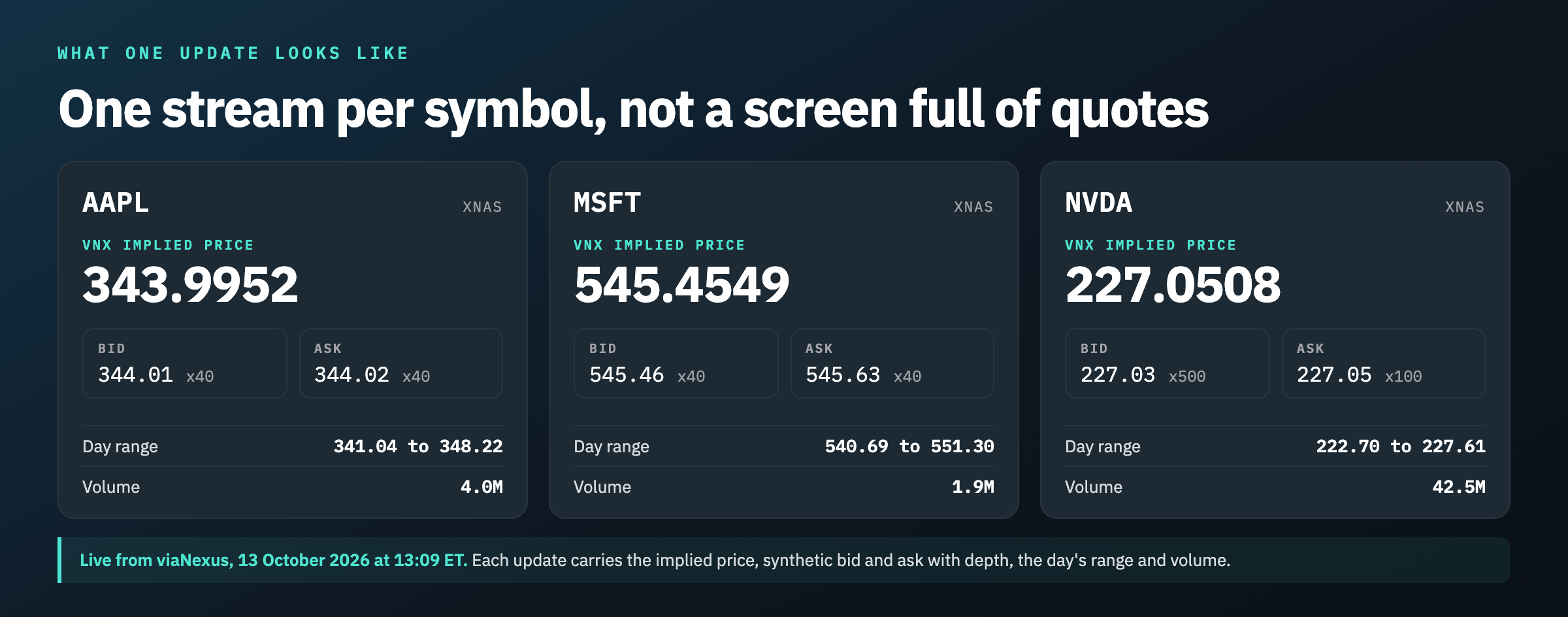
VNX Implied Price is a live estimate of where the market is pointing right now, backed by a platform that understands what each quote means before it relies on it.
Try it on a free 14 day trial, and start building.
Curious about the architecture behind viaNexus? Contact us or read the VNX Price documentation.
Start a free trial, add the connector in Cursor or Claude, and ask it for a live price.