Argentina's stock market returned 30% over the past year. Chile's returned 16%.
On price alone, Argentina looks like the obvious call. EIU sees it differently: it rates Argentina's macroeconomic risk at 75, a D grade, against a B for Chile.
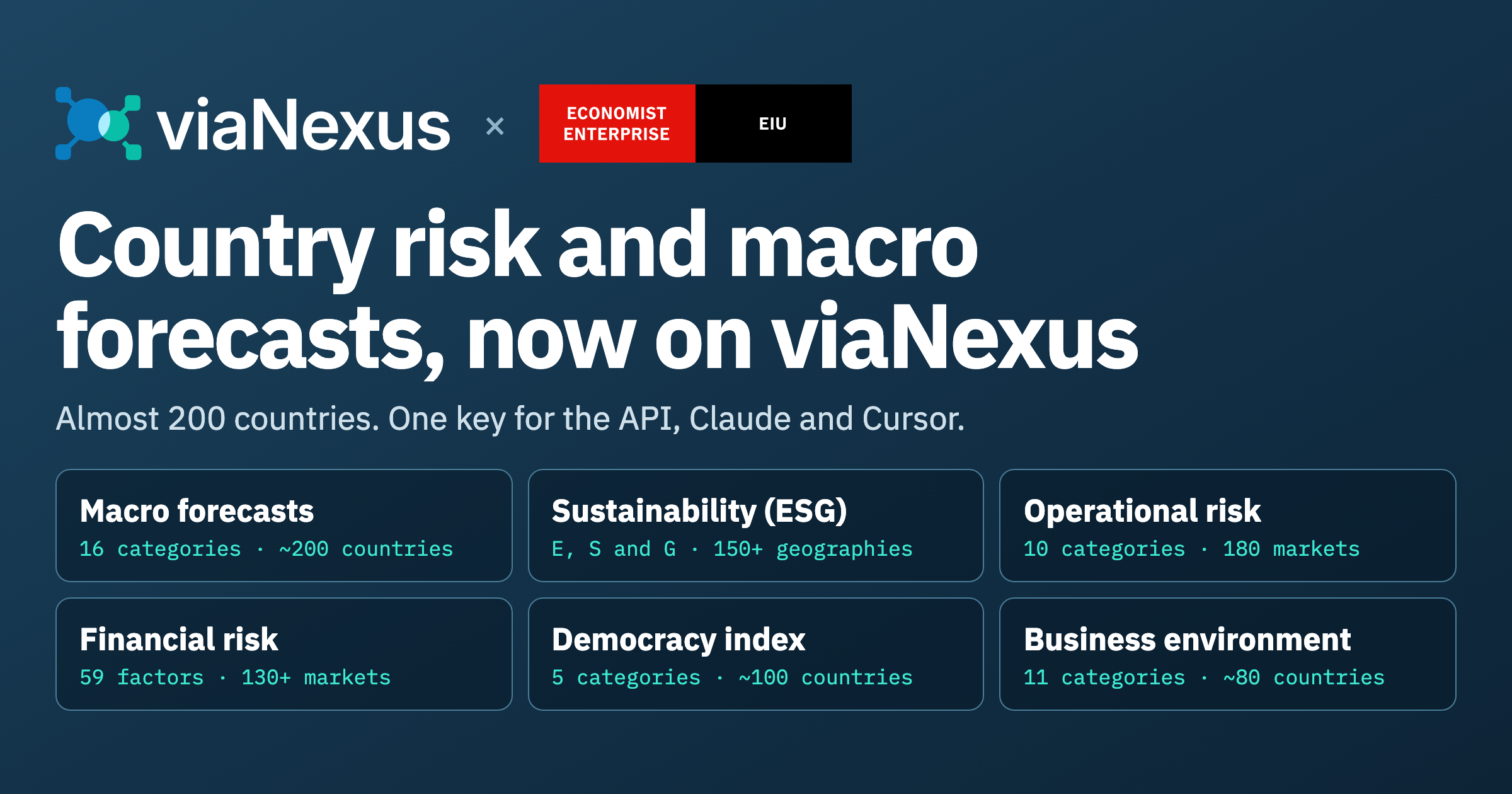
Until now, putting those two facts side by side meant two vendors, two contracts and two integrations. Starting today, they sit behind the same viaNexus key. EIU, part of Economist Enterprise, is now a data partner, bringing country forecasts, sustainability scores and risk models for almost 200 countries onto the platform next to the prices, fundamentals and news you already use.
Here is what is inside, and what you can do with it.
What is new
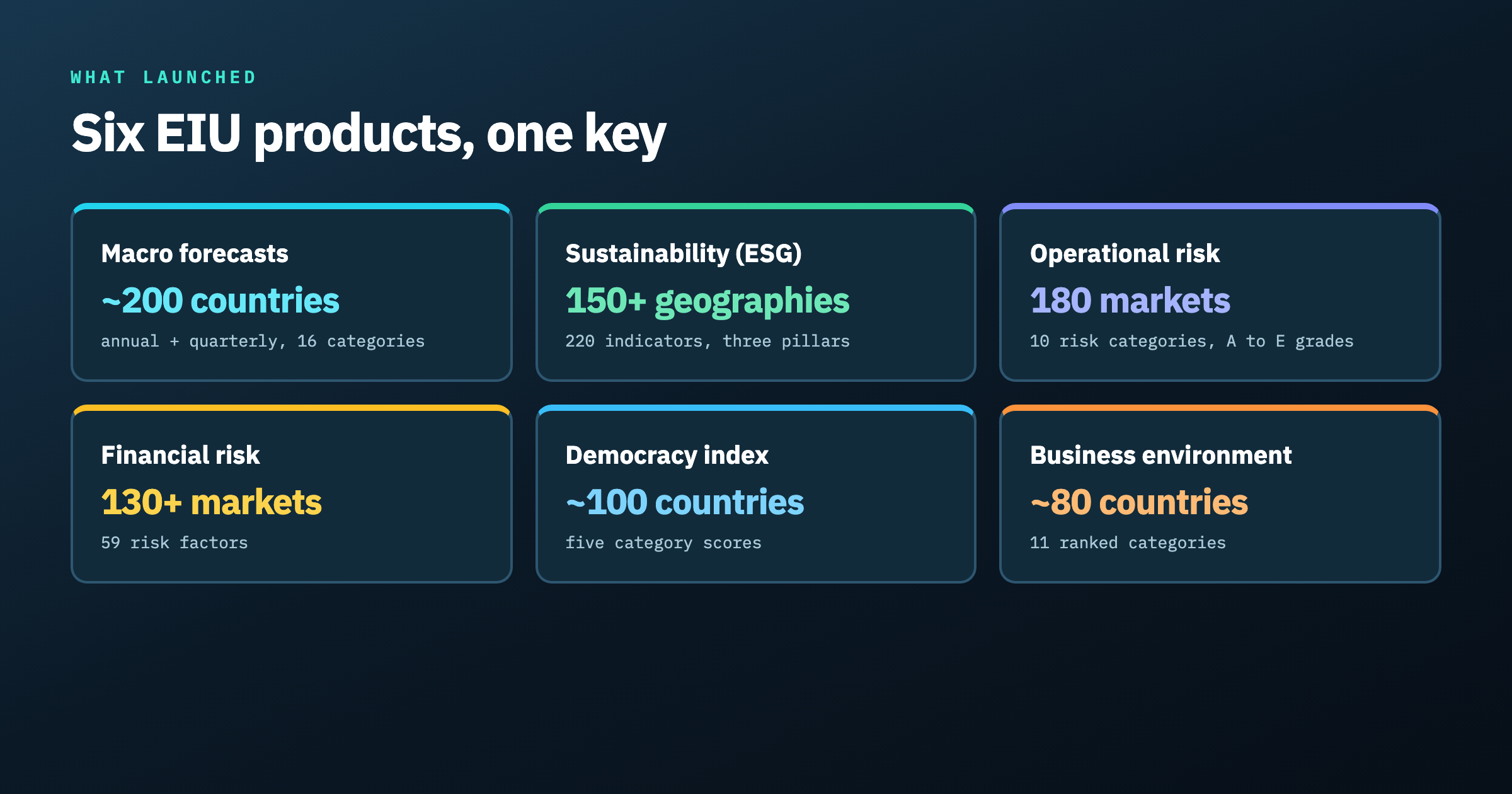
EIU is our first move beyond markets into country and sovereign risk. Six products are live today, all keyed by country and all reachable through the same API, MCP server and credential as everything else on viaNexus.
Most teams start with the same question about any economy: where is it heading?
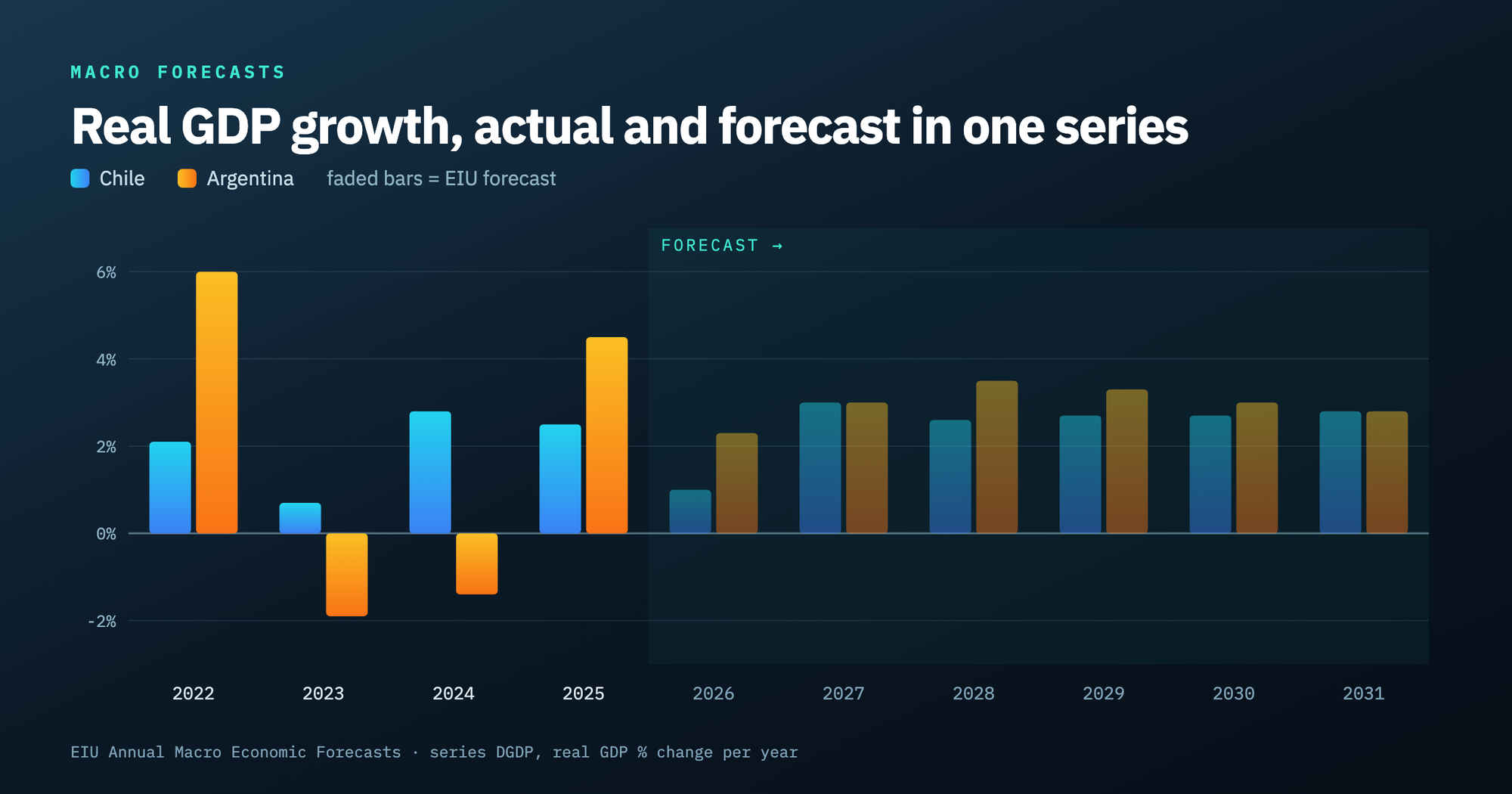
Macro forecasts, actual and forecast in one series
The annual and quarterly macro datasets cover almost 200 countries across 16 indicator categories, from GDP growth and fiscal policy to energy, trade, demographics and healthcare. More than 1,200 series in all.
History and outlook arrive together. Every value is tagged as real or forecast, so one call for Argentina's real GDP growth returns the contraction of 2023 and 2024, the 4.5% rebound in 2025, and EIU's projection out to 2031.
Growth tells you where an economy is going. It does not tell you how the country is governed, how exposed it is to climate risk, or how it treats its people. That is what the sustainability index measures.
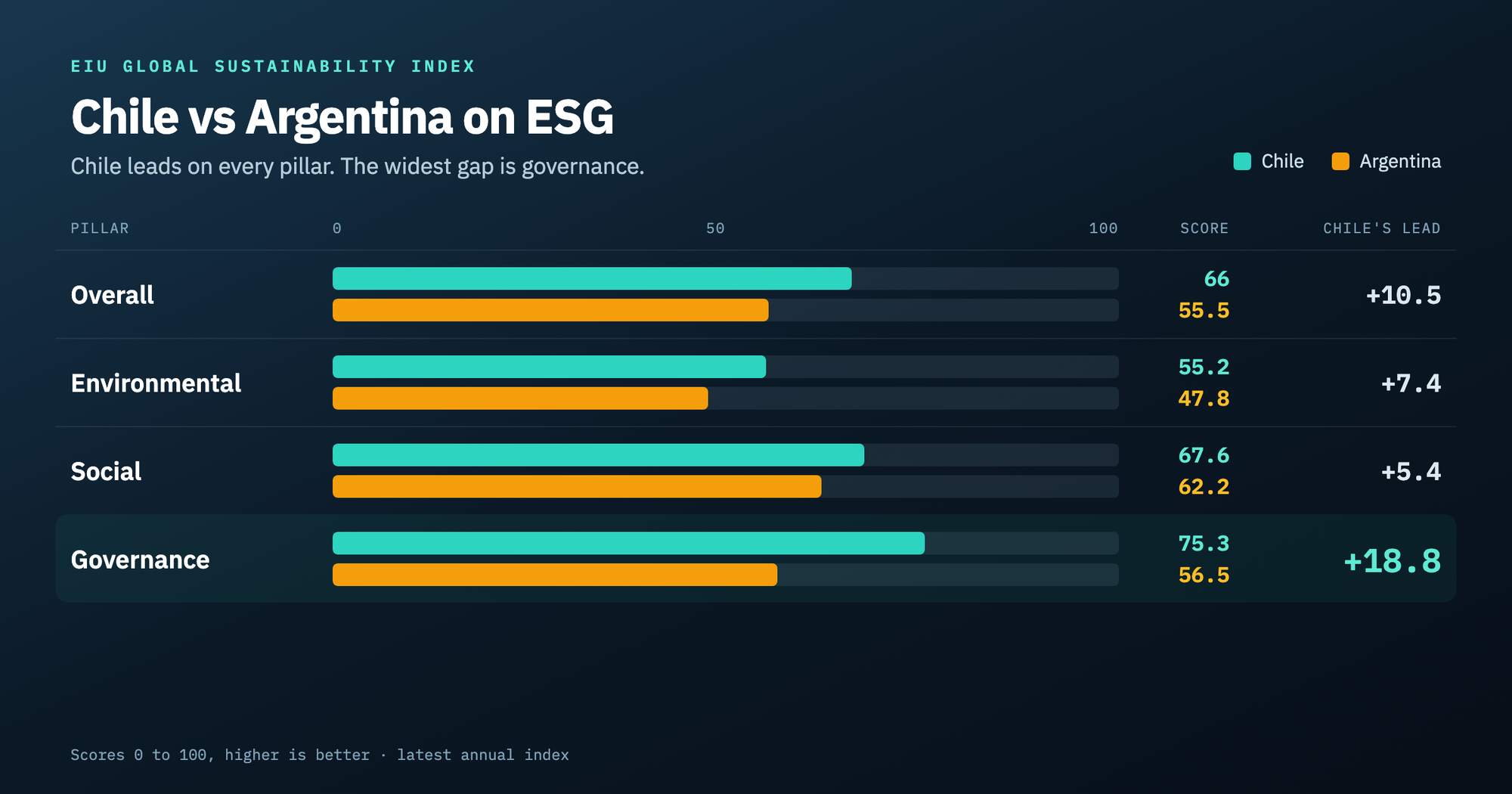
ESG scores for more than 150 geographies
The Global Sustainability Index scores environmental, social and governance performance from 220 indicators. Each pillar breaks down further, into decarbonization, physical climate risk, access to services, civil rights, corporate governance and more, so you can see why a country scores the way it does rather than only the headline number.
A strong sustainability profile is not the same thing as low risk, though. For that, EIU publishes four separate models, each looking at risk from a different angle.
Four ways to measure country risk
- Operational risk across 180 markets, scoring 10 categories such as political stability, security, tax policy and infrastructure from 0 to 100, with A to E grades. Updated quarterly.
- Financial risk across more than 130 markets, built from 59 monetary, fiscal and banking factors, including separate banking sector and currency risk scores.
- Democracy index for around 100 countries, scoring electoral process, government functioning, political participation, political culture and civil liberties.
- Business environment rankings for around 80 countries, averaging 11 categories into one overall score.
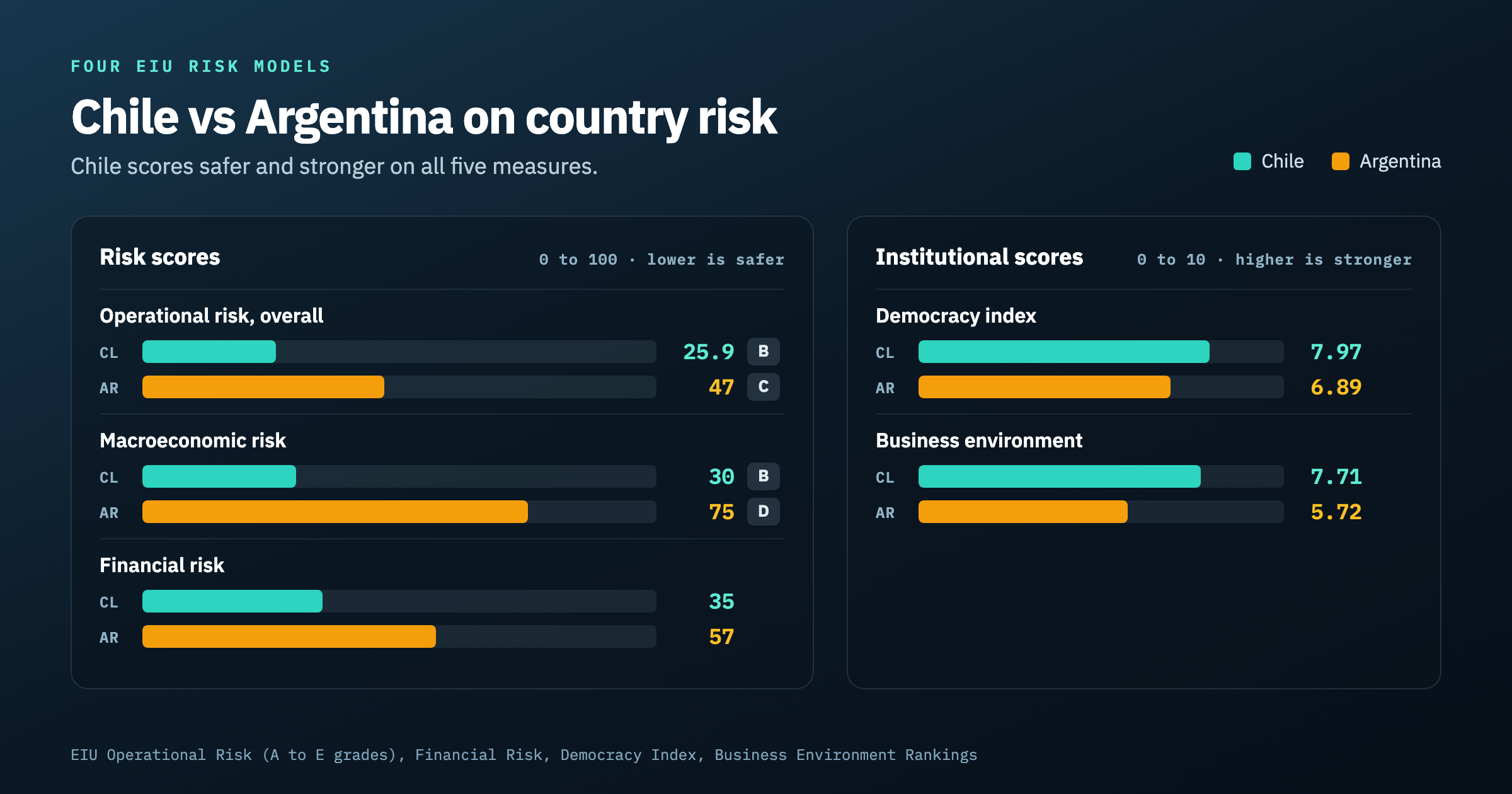
Which brings us back to the question we started with. Chile scores better on every EIU measure, yet Argentina's market nearly doubled Chile's return. EIU alone cannot explain that gap, and neither can price data alone.
You need both, and viaNexus is the one place you can get them together.
Where it gets interesting: combining it with everything else
Country risk on its own is a report. Country risk next to live market data is a decision.
On viaNexus, EIU sits on the same key as every other dataset in the catalog: prices, fundamentals, stock statistics and news. That means you can put a risk grade beside a country ETF's one-year return, a local company's stock statistics and the latest newswire headline, and see the full picture in one place, with no second vendor and no second integration. A dashboard like this takes a handful of calls:
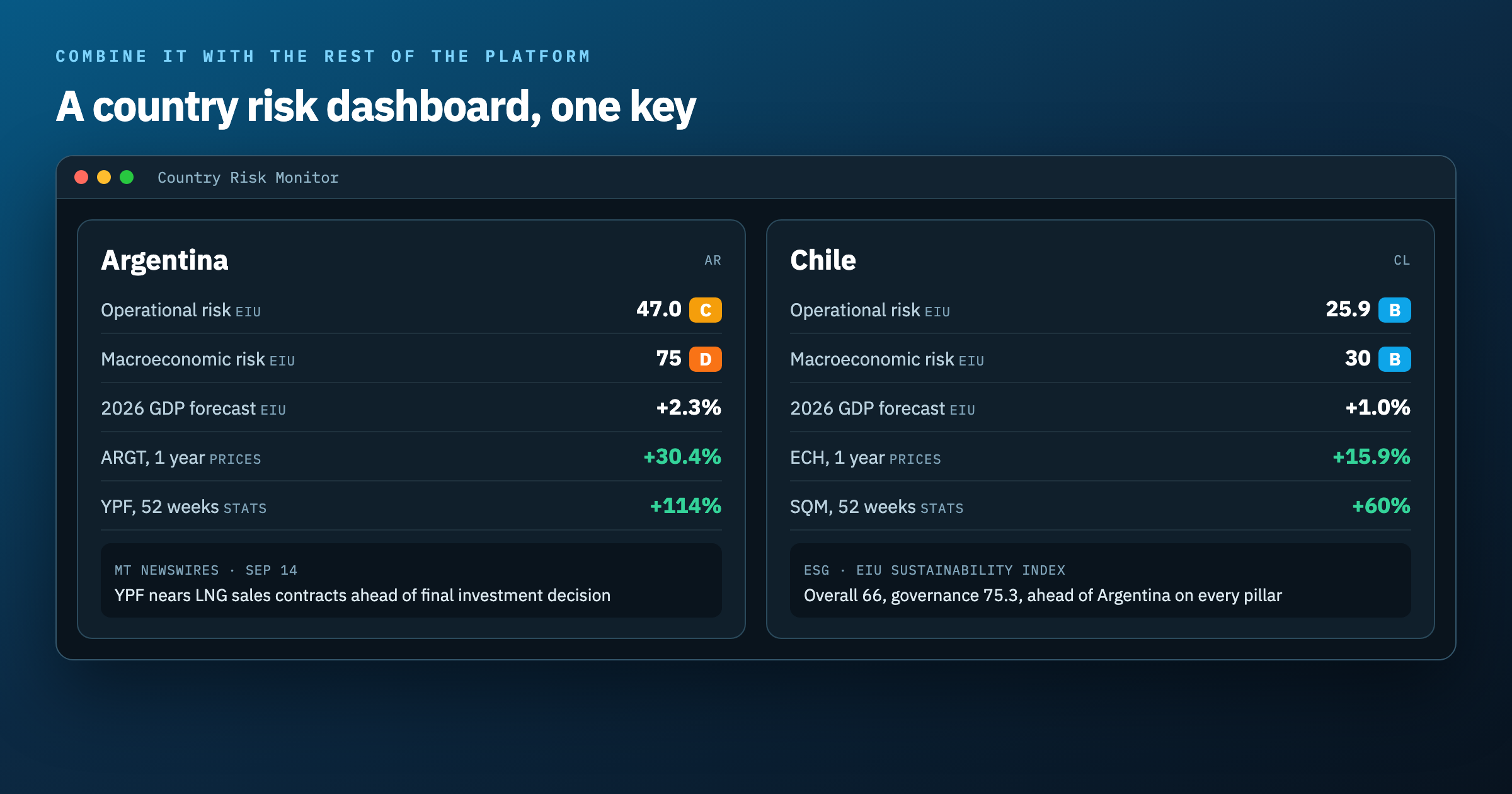
The same combination powers a range of products:
- Emerging market screens that weigh a country's return against its EIU risk grade before anyone allocates.
- ESG overlays for portfolios, scoring holdings by the sustainability profile of the countries they operate in.
- Country exposure monitors that flag when a market a company depends on moves down a risk grade.
- Research agents that answer macro and market questions in one pass instead of stitching sources together.
Or take it all the way to a product. Here is a country risk app built entirely on the same key, with a ranked watchlist on the desktop and a mobile view that flags what changed:
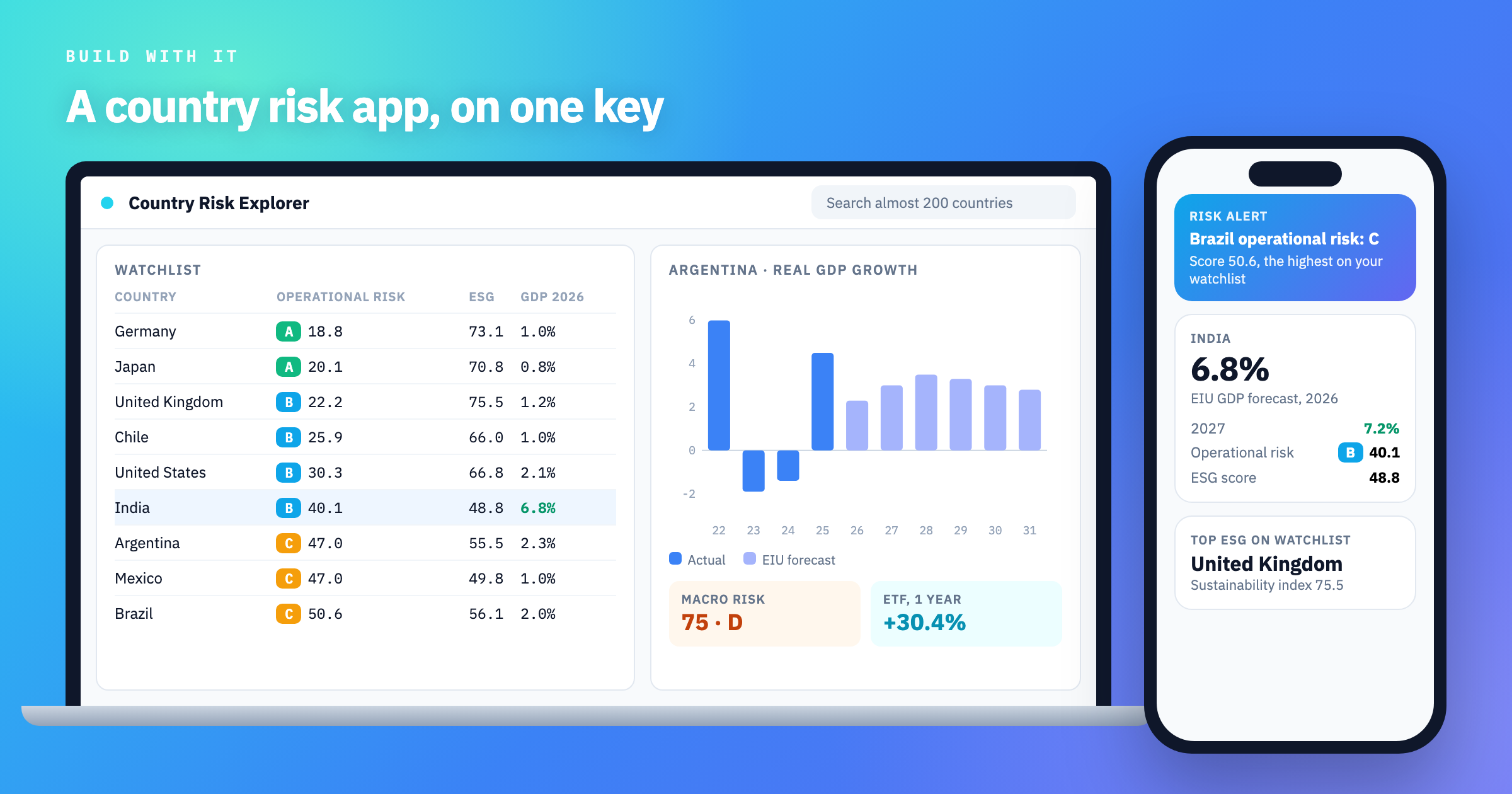
And if you would rather not build the dashboard at all, you do not have to.
Just ask your assistant
With the viaNexus connector in Claude or Cursor, you do not write the calls yourself. Ask a question that spans macro and markets, and the assistant pulls from EIU, prices, stock statistics and news together, then explains what it found:
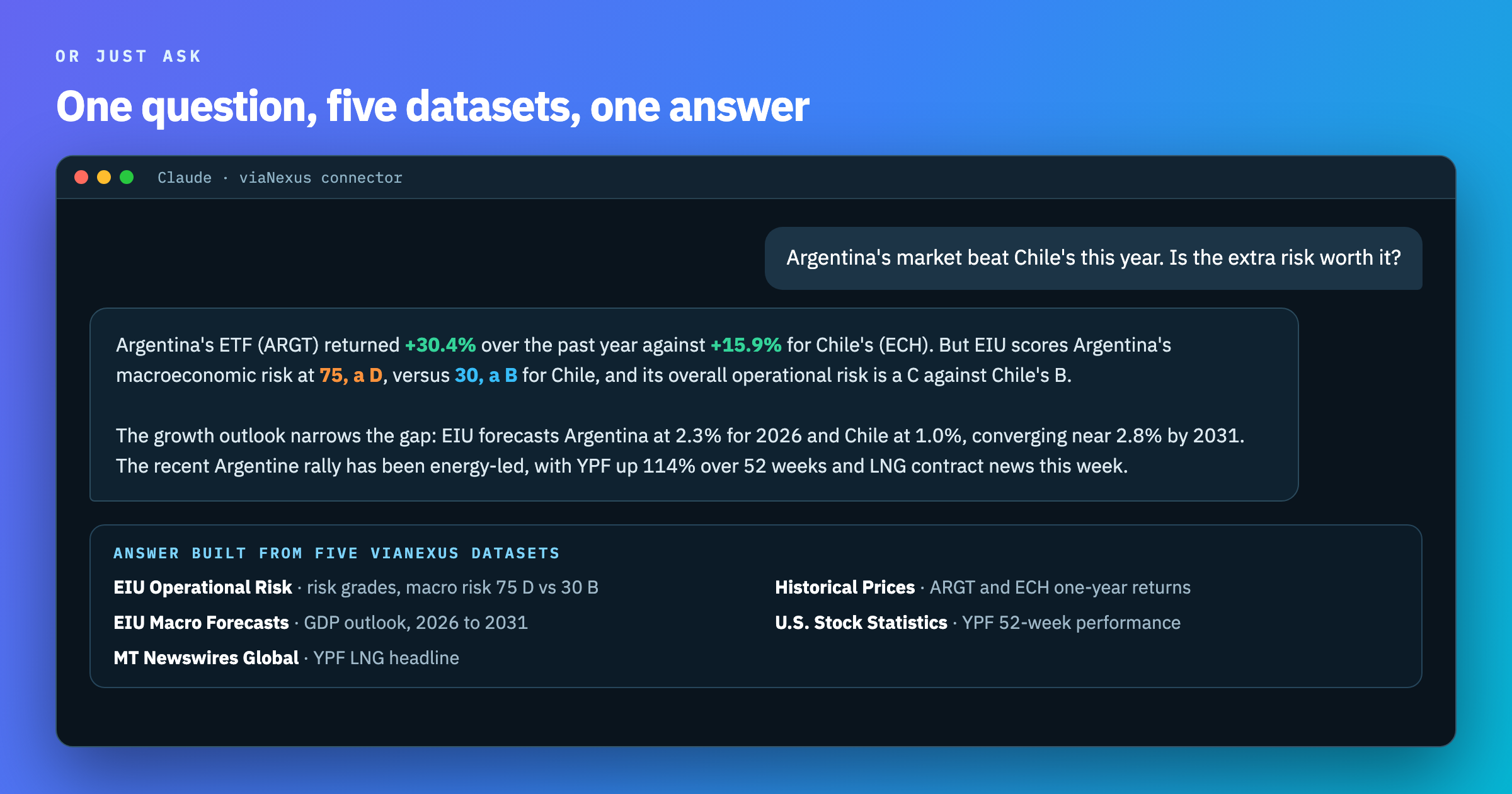
That answer draws on five datasets that sit side by side on viaNexus, two from EIU and three from the rest of the catalog:
- EIU Operational Risk: risk scores and A to E grades for each country, including the macroeconomic risk score of 75 (D) for Argentina and 30 (B) for Chile.
- EIU Annual Macro Forecasts: historical and forecast economic indicators, used here for GDP growth through 2031.
- Historical Prices: end-of-day prices for global equities and ETFs, used for the one-year returns on ARGT and ECH.
- U.S. Stock Statistics: key stats for U.S.-listed stocks, including 52-week performance for YPF.
- MT Newswires Global: real-time company and market news worldwide, where the YPF LNG headline came from.
The full picture, in one place
Argentina or Chile was never a question one dataset could answer. The market said one thing and EIU said another. The real answer sat in between, in the growth forecasts, the energy rally and the headlines behind it.
That is what this launch is about. Country risk, macro forecasts and sustainability scores now sit beside prices, fundamentals and news on viaNexus, on one key, through one API and one connector. No separate vendor, login or integration.
Whether you are building a dashboard, screening sovereign risk, powering a research agent or just asking a question, viaNexus is where you see the whole story. Almost 200 countries are live today. Pick one and see what it tells you.
If you are evaluating country risk or macro data for your team, contact us about EIU access.
Start a free trial, add the connector in Cursor or Claude, and ask it about any of nearly 200 countries.